
Slow braised beef brisket coated in a deep smoky spice rub until fork tender, then finished with a sticky caramelized barbecue crust.
Beef brisket is legendary for its deep, rich flavor, but cooking it wrong can turn a premium cut into a dry and tough roast. When cooked low and slow with the right balance of smoke, acid, and seasoning, the tough connective tissues melt away entirely.
This slow cooked brisket delivers restaurant quality barbecue right from your home kitchen without needing a commercial wood smoker. We start with a robust spice rub of dark brown sugar, smoked paprika, garlic powder, onion powder, and crushed black pepper that forms a savory crust on the beef.
As the brisket cooks gently over eight hours, its internal collagen transforms into gelatin. The meat essentially braises in its own rendered juices alongside a splash of beef broth, apple cider vinegar, and Worcestershire sauce. The result is so tender you can cut thick slices with the side of a fork.
Our biggest learning moment from testing dozens of briskets came down to fat trimming. The first time we made it, we trimmed off all the surface fat and the flat cut turned out stringy. Leaving a thin quarter inch fat cap on top protects the muscle fibers, continuously basting the beef as it cooks.
Brisket comes from the breast section of the steer, a heavily exercised muscle group packed with thick bundles of tough collagen and connective tissue. Cooking this cut quickly over high heat causes the muscle fibers to seize up tightly, resulting in leathery meat.
When beef is held at gentle temperatures between 190 and 205 degrees Fahrenheit over several hours, collagen undergoes thermal denaturation and hydrolyzes into rich gelatin. Gelatin holds up to ten times its weight in water, coating every individual muscle fiber in luxurious moisture.
Apple cider vinegar in the braising liquid adds mild acetic acid that softens outer protein strands while balancing the rich, beefy fat. Dark brown sugar in the dry rub attracts ambient moisture through hygroscopic action, locking seasonings firmly to the surface.
The final step is our signature broiler glaze. Brushing the slow cooked roast with barbecue sauce and broiling for five minutes triggers rapid Maillard browning and sugar caramelization, creating a sticky barbecue bark reminiscent of pit smoked brisket.
When shopping at the butcher or grocery counter, look for a flat cut brisket weighing between 3 and 4 pounds with visible marbling throughout the meat. If buying a whole packer brisket, you can separate the flat from the point and freeze the point for burnt ends.
For the dry rub, use freshly ground coarse black pepper rather than fine powder. Coarse pepper provides texture and heat that stands up to long cooking times. Smoked Spanish paprika gives the rub an authentic wood fired aroma.
Worcestershire sauce and low sodium beef broth form the savory braising base. Worcestershire contains fermented anchovies, tamarind, and molasses, delivering concentrated natural glutamates that amplify beef flavor.
Choose a thick, molasses based barbecue sauce for the finishing glaze. Sweet Baby Ray, Stubb, or a homemade honey chipotle barbecue sauce all caramelize beautifully under high oven heat.
Never slice brisket straight out of the cooker. Allow the cooked beef to rest on a cutting board tented with foil for a full 15 to 20 minutes before taking a knife to it. Resting allows the expanded muscle fibers to relax and reabsorb hot juices throughout the roast.
Always inspect the grain of the meat before slicing. The muscle fibers in a brisket run in one clear direction. Position your long serrated or carving knife perpendicular to the grain and cut pencil thick slices. Slicing with the grain leaves long, chewy strands, while slicing against the grain breaks the fibers into melt in your mouth bites.
Brisket is one of the rare meals that tastes even better on day two. You can cook the entire roast a day in advance, let it cool in its cooking juices, and store it tightly covered in the refrigerator. The fat will solidify on top for effortless removal before reheating.
To reheat, slice the cold brisket, place it in a baking dish with the reserved braising juices, cover tightly with foil, and warm in a 325 degree oven for 20 minutes until piping hot and tender.
Placing the fat layer on top allows the rendering beef tallow to continuously drip downward through the meat fibers during the 8-hour braise, naturally basting the flat cut.
Cutting hot brisket immediately after cooking will cause all the internal moisture to spill onto the cutting board. Give it a full 15 minutes of resting time so the gelatin and juices redistribute throughout every slice.
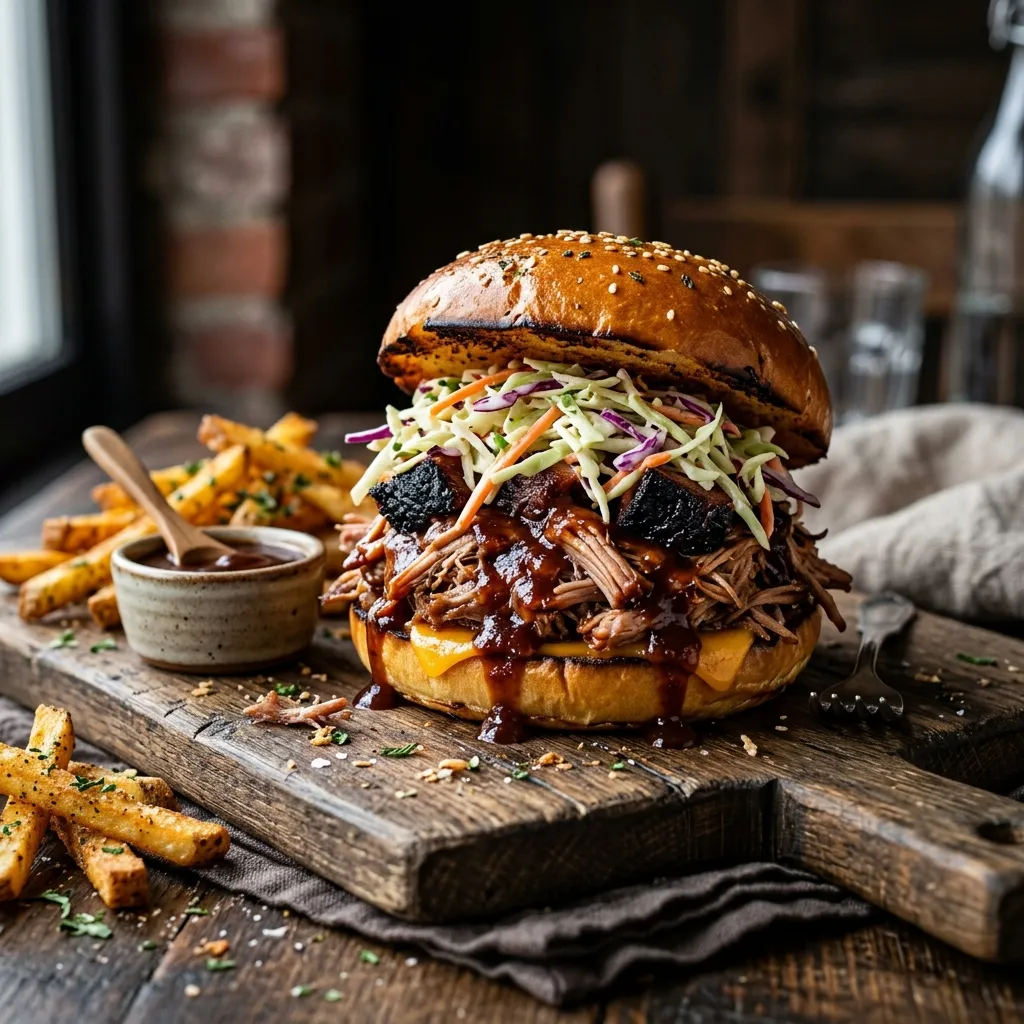
The juices remaining in the bottom of the slow cooker are concentrated liquid gold. Pour them into a glass measuring cup, spoon off the top rendered fat, and use the remaining liquid as an au jus drizzle for sliced beef or pulled sandwiches.
While the high setting on a slow cooker works in a rush, cooking brisket on LOW gives connective tissues the gentle time needed to melt slowly into tender gelatin without drying out the protein strands.
Follow me on Pinterest for more delicious ideas!

John is a certified nutritionist and former restaurant head chef. He shares healthy, weeknight-friendly meals that don't compromise on flavor.
View all recipes by John ➔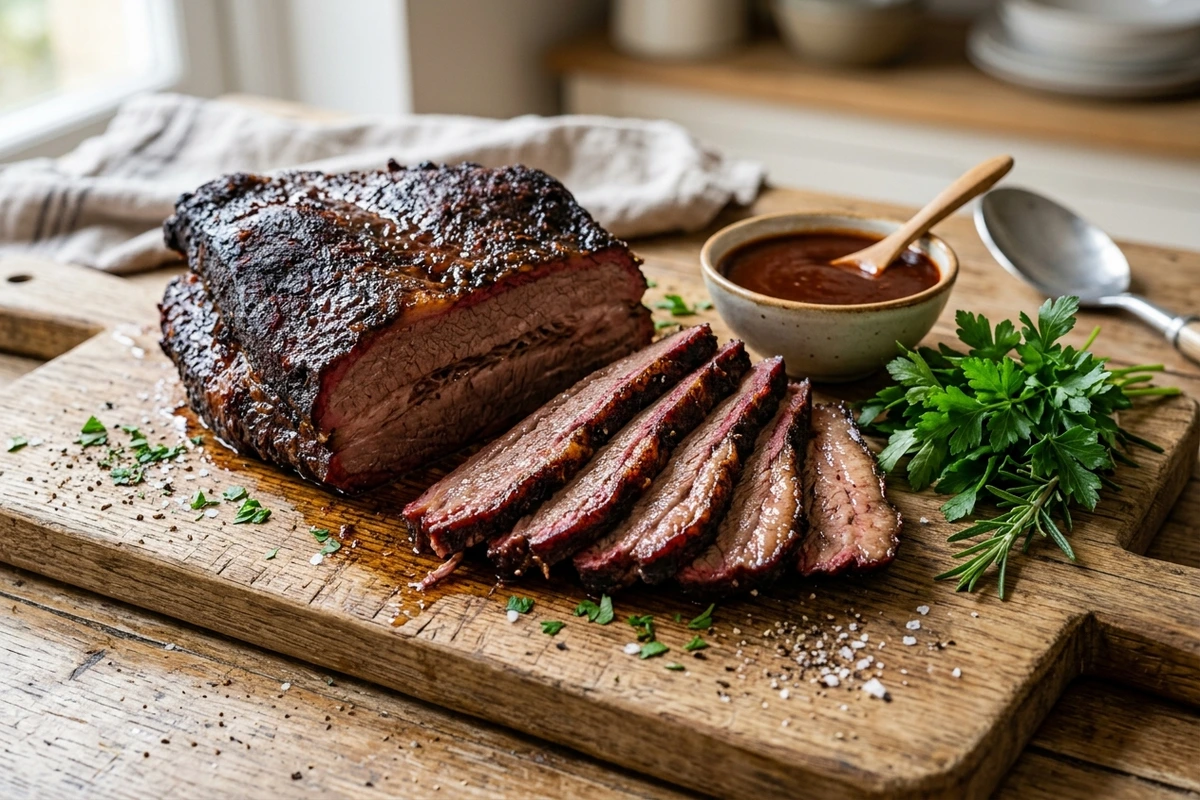


Comments & Reviews
4.8 (125 Ratings)Leave a Reply
Robert H.
★★★★★ August 2026I have smoked briskets on a pellet grill for years, but this slow cooker method blew my family away. The brown sugar rub and broiler glaze gave it that sticky caramelized crust that tasted like authentic Texas BBQ.
ReplySamantha K.
★★★★★ August 2026Made this for Sunday family dinner and there was not a single slice left. The meat literally fell apart with a fork. Slicing against the grain made every bite unbelievably tender.
ReplyJames M.
★★★★★ August 2026The pan juices mixed with Worcestershire and cider vinegar made the most incredible sauce. We used leftovers for pulled brisket sliders the next night. Outstanding recipe.
Reply