
Tender, flaky salmon baked with a bold blackened Cajun spice crust and smothered in a refreshing, velvety avocado lime cilantro crema.
We make salmon in our kitchen at least twice a week, but this Cajun version with avocado lime sauce is the one our guests always request. It brings together bold, smoky Southern heat with the cool, velvety richness of fresh avocado.
Salmon is naturally rich in healthy omega-3 fatty acids, which makes it the ideal protein for taking on heavy, robust seasonings. The Cajun spice blend forms a deeply aromatic, blackened crust on top of the fillet while keeping the center tender, juicy, and moist.
The standout element is the creamy avocado lime sauce. Blending ripe avocado with fresh lime juice, sour cream, minced garlic, and cilantro creates a cooling contrast that cuts straight through the warm cayenne and smoked paprika spices. Every bite gives you hot spice and cool creaminess at the exact same moment.
Our earliest mistake with this dish was overbaking the fish at a low temperature. Baking at 350 degrees caused the white albumin protein to push out of the sides, leaving the fillet dry. The solution is baking hot and fast at 400 degrees for exactly 12 to 14 minutes, pulling it when the thickest part reaches 125 to 130 degrees.
Cajun seasoning relies on a mix of smoked paprika, garlic powder, onion powder, dried oregano, thyme, and cayenne pepper. When brushed with olive oil and exposed to high oven heat, these dry spices caramelize without burning, creating a savory barrier that seals moisture inside the salmon flesh.
Capsaicin is the chemical compound responsible for the heat in cayenne pepper. Because capsaicin is fat-soluble rather than water-soluble, drinking water will not cool your mouth after spicy food. The natural plant fats in avocado and dairy fats in sour cream bind to the capsaicin receptors on your tongue, instantly mellowing the burn into a pleasant, lingering warmth.
Fresh lime juice serves two critical roles. First, the citric acid prevents the mashed avocado from oxidizing and turning brown. Second, the bright citrus acidity cuts through the dense fat profile of the salmon, keeping the entire plate feeling light and vibrant.
You can prepare this recipe using wild-caught Alaskan salmon, Atlantic salmon, or King salmon fillets. Atlantic salmon has a higher fat content and stays exceptionally juicy, while sockeye salmon offers a deeper red color and firmer texture.
Look for center-cut salmon fillets of uniform thickness (around 1 to 1.5 inches thick). Uniform fillets ensure that every piece cooks to the exact same level of doneness without thinner tail pieces drying out.
While store-bought Cajun seasoning works in a pinch, making your own blend takes under 60 seconds and lets you control the sodium level. Commercial blends often contain excessive salt. Our custom blend uses sweet smoked paprika, garlic, onion, oregano, black pepper, and just 1/2 teaspoon of cayenne for balanced heat.
For the avocado sauce, select an avocado that yields slightly to gentle thumb pressure. If your avocado is too firm, the sauce will turn grainy. If you do not have sour cream on hand, plain whole-milk Greek yogurt makes a high-protein, tangy substitute that blends just as smoothly.
Fresh cilantro adds an herbal freshness to the crema. If you are someone who dislikes cilantro, you can substitute fresh flat-leaf parsley or fresh dill. Both herbs pair naturally with lime juice and seafood.
Serve this baked salmon over warm cilantro lime rice, garlic roasted asparagus, seasoned black beans, or a crisp green salad. The extra avocado lime sauce also works as a delicious dip for warm tortilla chips or roasted baby potatoes.
Store leftover salmon and sauce in separate airtight containers in the refrigerator. Cooked salmon remains fresh for up to 3 days. The avocado sauce will stay bright green for 2 days if stored with plastic wrap pressed directly against the surface of the sauce to block oxygen contact.
To reheat salmon without drying it out, place the fillet on a baking sheet, cover loosely with foil, and warm in a 300 degree oven for 8 minutes. Avoid using the microwave on high power, as it quickly toughens the delicate fish proteins and creates an unpleasant fishy aroma.
Leftover cold Cajun salmon also makes an incredible protein topping for lunch salad bowls, grain bowls, or fish tacos the next day. Simply flake the cold salmon with a fork and spoon the chilled avocado sauce over the top.
Moisture is the enemy of a flavorful crust. Patting the raw salmon with paper towels before oiling allows the olive oil and spice blend to stick directly to the fish proteins rather than steaming off.
Salmon continues cooking for several minutes after leaving the oven through residual carryover heat. Pulling the fillets when an instant-read thermometer reads 125 to 130 degrees F ensures the center stays silky and juicy rather than chalky.
The temperature contrast between piping-hot blackened salmon and chilled avocado crema is the magic of this dish. Keep the blended sauce in the refrigerator until the exact moment you are ready to spoon it onto the fish.
Our recipe uses 1/2 teaspoon of cayenne for a pleasant medium heat. If you prefer a milder profile, reduce to 1/4 teaspoon. For an authentic fiery blackened kick, increase to 3/4 teaspoon.
Follow me on Pinterest for more delicious ideas!

John is a certified nutritionist and former restaurant head chef. He shares healthy, weeknight-friendly meals that don't compromise on flavor.
View all recipes by John ➔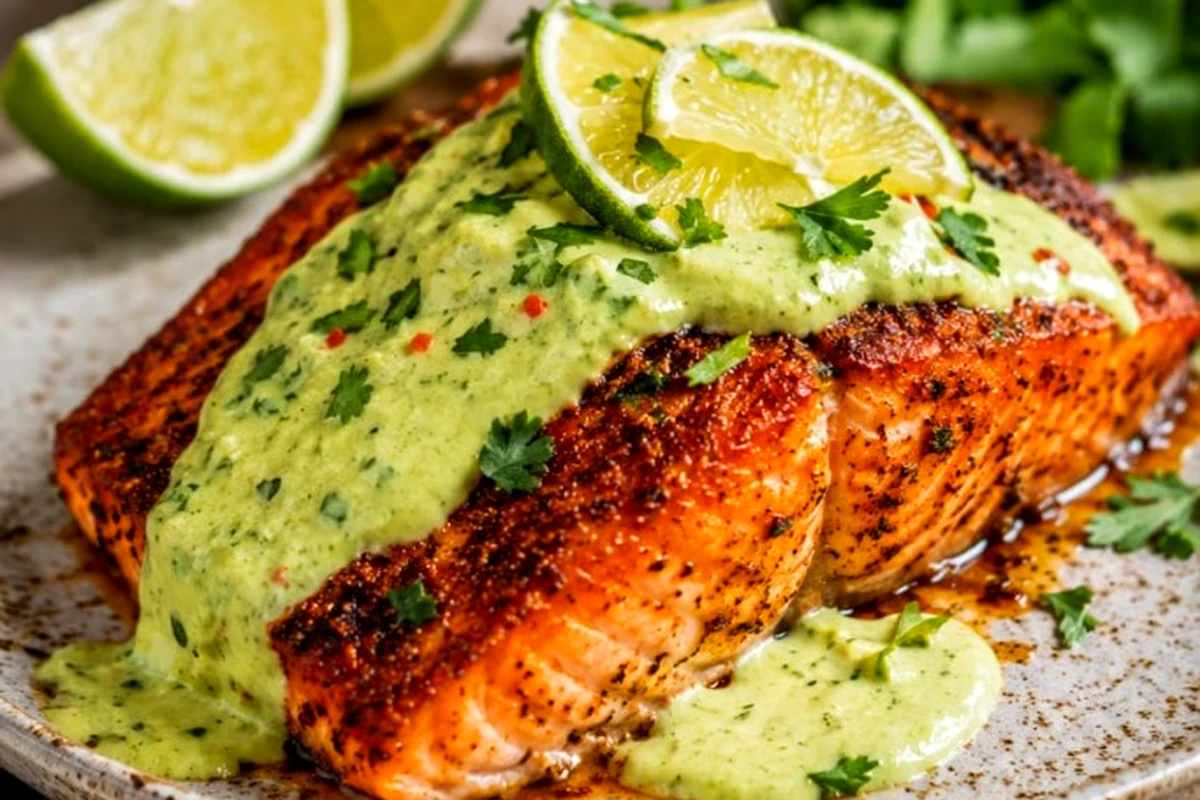


Comments & Reviews
4.8 (125 Ratings)Leave a Reply
David W.
★★★★★ August 2026The avocado lime sauce took this salmon to restaurant quality. The spicy Cajun crust with the cold sauce is such an incredible combination. Made it for my wife and she asked for it again the next day.
ReplyElena G.
★★★★★ August 2026Baked at 400 for exactly 13 minutes and it was the juiciest salmon I have ever cooked. No dry white protein pushing out. The homemade Cajun spice blend is 100 times better than store bought jars.
ReplyCarlos M.
★★★★★ August 2026I subbed Greek yogurt in the avocado sauce and it was super thick and creamy. Perfect 20 minute dinner on a busy weeknight. Will definitely be a regular in our house.
Reply